“We’ve invested in a website. Why isn’t it appearing on Google?”
The website looks professional, the services are excellent, and the team genuinely understands their industry. Yet when potential customers search for those very services, competitors appear while their own website remains buried several pages deep in search results.
Google ranks websites based on how useful, trustworthy, and relevant they are for each search. It looks at whether your content answers the user’s question, whether your website is technically sound, whether respected websites trust your business, and whether visitors have a positive experience once they arrive.
Recently, we worked with a business that had a Domain Authority below 10, almost no organic visibility, very few indexed pages, and virtually no SEO strategy.
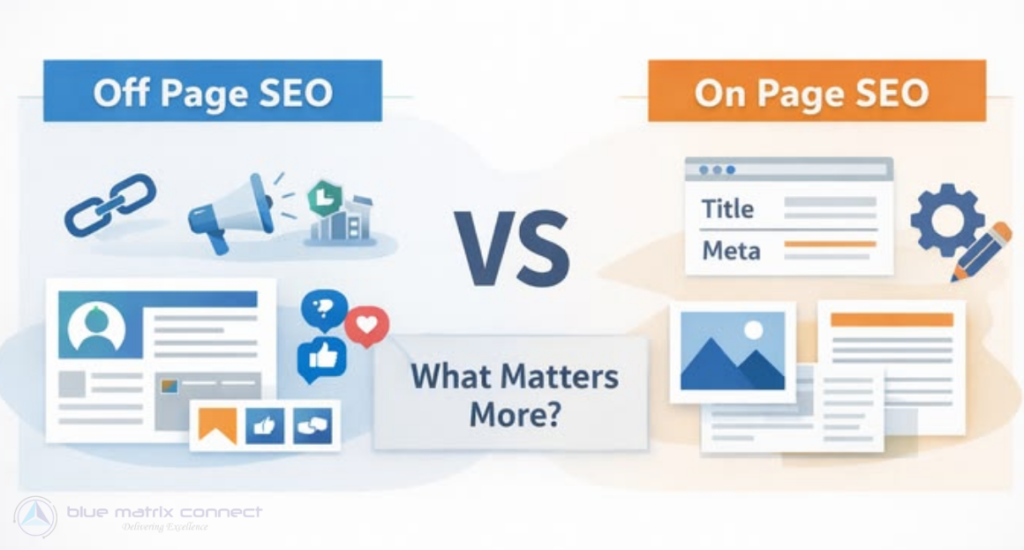
We focused on building a strong SEO foundation through carefully planned on-page SEO and off-page SEO. Within the first month, Google began recognising the improvements we had made. Over the following months, that momentum translated into first-page rankings for multiple target keywords, stronger organic traffic, and a noticeable increase in qualified enquiries.
A strong white-hat SEO strategy mixes effective on-page optimisation with ethical off-page practices to build authority and deliver sustainable organic growth. Understanding how these two pillars work together is the first step towards creating an SEO strategy that continues to perform, even as search engine algorithms evolve.
What businesses with low-authority websites can realistically expect from SEO.
On-Page SEO
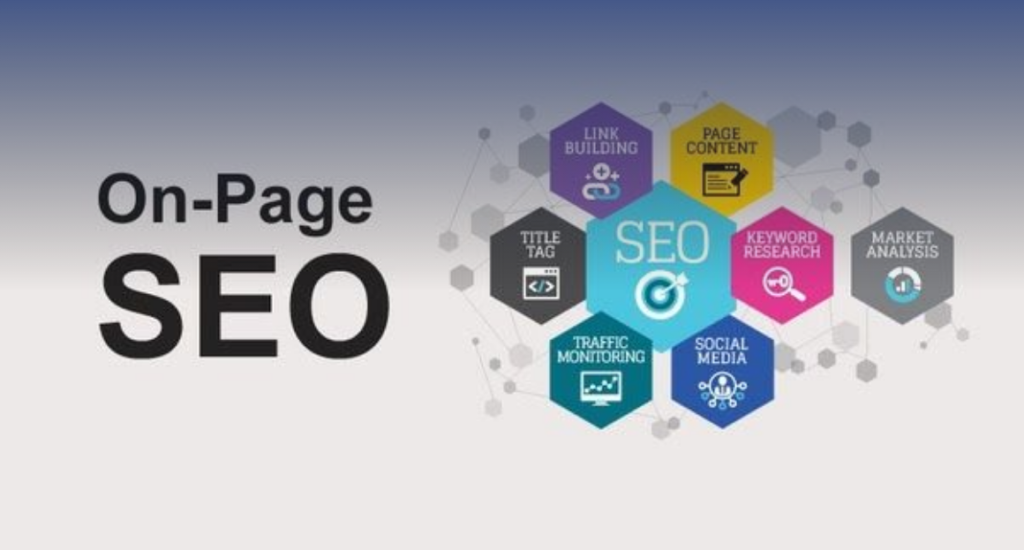
On-page SEO is the process of improving everything within your website so search engines can understand your content while visitors enjoy a seamless experience. Modern SEO has evolved far beyond just inserting keywords into paragraphs.
Today, Google evaluates how well a page answers a search query, whether it demonstrates expertise, how easy it is to navigate, how quickly it loads, and how effectively it guides users towards the information they’re looking for.
When we first analysed the client’s website, we discovered that although the design looked appealing, the pages provided very little context for search engines. Important service pages lacked depth, headings were inconsistent, metadata was missing, images weren’t optimised, and there was almost no internal linking connecting one page to another.
The website offered very few signals that it deserved prominent rankings. Our first objective was therefore to transform the website into a resource that both users and search engines could easily understand.
Every important page was rewritten around “search intent”, digging deep into customer behaviour.
Each page became more informative, easier to navigate, and naturally aligned with the search terms potential customers were already using. We refined page titles and meta descriptions, reorganised headings into a logical hierarchy, improved URLs, compressed images to improve loading speed, strengthened internal linking, implemented structured schema markup, and ensured the website performed well across mobile devices. These changed how Google interpreted the website.
Off-Page SEO Matters Just As Much
While on-page SEO helps Google understand your website, off-page SEO helps Google decide whether your website deserves to be trusted.
A business may have exceptional content, but if there are no external signals confirming its credibility, Google has little evidence that it should rank that business above established competitors.
We developed relationships with relevant industry websites, strengthened the client’s local business presence, improved directory consistency, encouraged authentic customer reviews, and created valuable content that earned links naturally.
Every backlink we pursued had a purpose. Rather than chasing numbers, we prioritised relevance and trust. Over time, these signals began reinforcing everything we had already improved within the website itself. Google could now understand the business and, more importantly, trust it.
The Turning Point
Search engines need time to discover improvements, crawl updated pages, understand new content, and evaluate authority signals.
Within the first thirty days of our campaign, however, we started seeing encouraging signs.
Google indexed more pages than before. Previously overlooked content began appearing in search results. Existing keywords moved higher in rankings, while several long-tail search terms entered Google’s index for the first time. Search impressions increased steadily, click-through rates improved, and the website’s overall technical health became significantly stronger.
Although the business hadn’t yet secured Page One rankings for its primary keywords, the direction of growth was unmistakable.
What Happened Over the Following Months
As the on-page improvements continued working alongside a carefully planned off-page strategy, the website gradually became more authoritative.
Content clustered around the client’s services helped Google understand the client’s topical expertise. Internal links strengthened relationships between pages. High-quality backlinks reinforced trust, while ongoing content updates signalled that the website remained active and relevant.
Around the third and sixth months, multiple target keywords reached Google’s first page. Organic traffic continued increasing month after month, not because of one exceptional article or one powerful backlink, but because every aspect of the SEO strategy supported the others.
Technical optimisation made the website easier to crawl. Content answered genuine customer questions. Internal linking distributed authority effectively. Off-page SEO strengthened credibility. These produced sustainable organic growth.
How Long Does SEO Really Take?
A website with an established reputation, quality content, and existing authority can often experience improvements relatively quickly. A newer website with a Domain Authority below ten requires considerably more patience because Google has very little historical trust to work with.
For websites with extremely low authority, the first month is usually focused on improving technical health, indexing, keyword relevance, and crawlability. During this stage, businesses often notice increases in search impressions and gradual improvements in keyword positions rather than dramatic traffic growth.
Over the next two to three months, those improvements usually translate into stronger rankings for long-tail and medium-competition keywords as Google becomes more confident in the website’s relevance.
By the fourth to sixth month, websites that continue publishing valuable content while building genuine authority frequently begin competing on Google’s first page for well-targeted search terms.
Highly competitive industries may require six months to a year, or even longer, to establish strong organic visibility. Trust cannot be manufactured overnight. Also, Google rewards consistency far more than quick wins.
Why On-Page and Off-Page SEO Should Never Be Treated Separately
Only when both On-Page and Off-Page SEO work together does long-term organic growth become possible. The website featured in this case study wasn’t transformed by secret algorithms or overnight ranking tricks.
It grew because we focused on fundamentals that continue to matter regardless of Google’s updates. That consistency eventually became the website’s greatest advantage.
If your website has a low Domain Authority, limited search visibility, or declining organic traffic, don’t assume that rankings are out of reach. Every authoritative website started somewhere.
With a clear strategy, realistic expectations, and the right balance of on-page SEO and off-page SEO, even websites with very little authority can build lasting visibility, attract qualified visitors, and earn Google’s trust over time.
Because successful SEO is about becoming the result your customers and Google are looking for.
Is Your SEO Flatlining?
If your SEO performance looks more like a flatlined ECG or worse, it’s steadily declining, it’s time to change course. The right combination of on-page optimisation and off-page authority building can turn your website into a consistent source of organic traffic, qualified leads, and growth. Don’t let your competitors outrank you. Let us help you build the visibility, authority, and search performance your business deserves. Book a free call with us now!